19 December, 2022

Winner, Winner, Chicken Dinner

A box of Banquet fried chicken flies my way from a friend at work, quite by happenstance and without expectation of reimbursement. "Here you go, Byron," is all he says.

Free food is rare, especially in prison. Here, even a "free" chow-hall meal can be something you pay a price for eating. This box of chicken is doubly awesome for that fact. I offer sincere thanks and immediately start making dinner plans.

An hour an a half later, when I return to the cell, my cellmate, Bob, is vegging out on the bottom bunk. I announce that dinner's on me. Without actually moving from his supremely kicked-back position, he seems to sit up a little straighter and ask, "Do you need me to do anything?" "Just lie there and be cool." "Can do, boss," Bob answers back. There's a reason that I don't often cook my food in the wing. It's people. Merely walking the thirty-five feet from my door to the microwave attracts the gaze of every looky-loo in the place. As off-putting as cooking in front of a slew of hungry eyes might be, up-close questions about my meal make it even less appealing. I prefer not having to ask people to not talk directly over my food, which happens more often than you'd guess. Standing at the microwave in the middle of the wing, nuking four pieces of genetically modified fowl, a neighbor who's pathologically prone to argument hits me up for advice on how to properly format a survey. (There truly is no limit to the number of odd scenarios one encounters in prison.) This man has been known to turn "It's a nice day!" into a heated dispute, so I try to avoid extended conversation with him, knowing that every passing second puts me at greater odds of an unpleasant exchange. I explain to Captain Querulous why the precise wording of survey questions matters, all the while periodically checking my poultry. There's an instant when he takes a half-step back and turns his body 30° to the right
– an avoidant posture that body-language analysts call "blading." I quickly change tack. He starts to sputter a refutation, but I barrel past the part he wants to disagree with, not letting him get a word in. Amazingly, it works. I change the subject and he seems none the wiser. A minute or so later, the beep affords me all the excuse needed to slip away before the exchange becomes a dispute. "Hot chicken, coming though!" Loitering conversationalists part to grant me passage. Someone clucks at me excitedly, and I pretend not to hear. I return to the cell just as the water for our instant mashed potatoes starts to boil. Setting the hot box to one side of the desk, I pour two cups, measured as precisely as my eyeball could manage, into the bowl containing a pouch of Idahoan Roasted Garlic and Parmesan mashed potatoes. I stir like mad to keep it from clumping. People on the outside know how important food is to the imprisoned. What they don't realize is the extent of the options available to us here. I've posted about the canteen before ("Prison Canteen Food Roundup," anyone?), but this was just a sampling of the four-page shopping list available to a Missouri prisoner every week. It's more than chips and cookies. Items like chili, beef stew, and lasagna – all in pouches, like military MREs – sell pretty well, and an assortment of shelf-stable meat and fish sells even better. Fried chicken is a twice-a-month treat, a fundraiser for the Puppies 4 Parole program, but even so, I've only bought it once in all my years. I'm worried that I might not have warmed it up properly. Bob produces a big bowl and accepts his half of the chicken pieces with a hungry smile. The mashed potatoes plop satisfying next to them. "The presentation isn't much," I say, "but enjoy." He shrugs. "I don't give a shit about presentation. This is better than what the chow hall's serving."
I do a little bow in acknowledgment of the creatures that lost their lives for it, the people who worked to prepare, cook, and package our little feast, and the friend who spent good money to give it to me, then bend to eat. Without question, it is better than dining hall food. I go to work with a full belly, walking proof that a person can find satisfaction in even unpleasant places.

09 December, 2022

The Perks and Pitfalls of Becoming a People Person

"Nobody gets in to see the Wizard," the guard tells Dorothy Gale at the front gates of the Emerald City. "No way, no how." Of course, as anyone who's seen The Wizard of Oz knowns, Dorothy and her intrepid friends eventually finagle their way inside. The scene that meets them there is of the Great and Powerful Oz, a giant green face, suspended in billows of smoke, whose voice booms through the great Technicolor hall. He scowls from on high and flickers the lights to great effect. He isn't happy to see them.

I understand why Oz would feel this way. I've always felt myself to be an introvert. Being around other humans is often a drain. I don't do especially well in crowds. My emotional and physical energy used to plummet at parties, family get-togethers, workplace meet-and-greets, conventions, and crowded bars – anywhere people mill around, looking to strike up conversations with the guy sitting peacefully by himself, counting down the minutes until he can make a strategic exit. Find me in the corner seat, possibly in the dark, far removed from the hullabaloo and contentedly aloof.

I do well enough one-on-one. Catch me in a coffeehouse or at the park and strike up a conversation, and I might even charm you. Personal discourse makes sense in these settings, where there's usually just one conversational thread that needs following. I can focus on you then, offer the attention you deserve. Splitting my gaze and my speech between you and three other people hovering around the hors d'oeuvres table won't end disastrously, but it's guaranteed to tucker me out. A stand-alone guy can only take so much togetherness. At work, I'm at my best behind the camera and at the desk where I handle post-production matters. One coworker has taken to calling me "Magic Man" for the way I seem capable of transforming what was thought to be unusable footage into high-quality video sequences. Random viewers do regularly complement the production values of projects I handled. For someone not altogether comfortable with accepting praise from unknown so-and-sos, it can feel awkward in the moment. This isn't to say that I'm unappreciative. The position I hold on the board of the Speak Easy Gavel Club, ERDCC's Toastmaster affiliate, is Vice President Education. I schedule the various roles for every meeting
– Ah-Counter, Grammarian, Timer, Speakers, Evaluators, TableTopics Master, and Toastmaster – and ensure that everyone gets a fair share of the responsibility. I also track every member's progress in the Toastmasters education track. It's not an invisible job, but all of the heavy lifting takes place outside of members' view. This is how I like it, pulling the levers, occasionally talking into the microphone, but ultimately taking a seat there, behind the curtain, where no one bothers to look. In The Wizard of Oz, Dorothy's little black terrier, Toto, mischievously pulls back the draperies to reveal a frantic old man controlling the big face and its pyrotechnics. "Pay no attention to the man behind the curtain," he stammers into his microphone, flailing to restore his privacy. But the jig is up; Oz has been outed. I had a couple similar moments this past week. In the first, I was asked to join a fledgling peer-support organization that's just getting off the ground at this facility. It would require a great deal of organization, no small amount of effort, and a willingness to devote time to the formation of a therapeutic community – a tempting offer but a big ask for anyone, let alone for someone as solitary (and as busy) as I am. In the second step-into-the-light moment of this week, a former Gavelier volunteered that they'd only come back if I became the club president. They'd urged me to run in a recent interim election, when the presidency was vacated suddenly, but I couldn't see abandoning my current office when other qualified candidates stood so readily at hand. The conversation this week was as much a pep talk as a plea: "I know you like working behind the scenes," they said, "but you need to step to the fore. And I'm not just talking Gavel Club. You have so much to offer people. It's time to let yourself be seen." All this got me thinking. I'm told that I give too much to others – consideration, attention, time. Conversely, I feel that I'm still too stingy with these things. I want to do more to help people, and I simultaneously want more time to myself. I feel so torn. Near the end of The Wizard of Oz, the Wizard emerges from his fortress to present Dorothy, the Cowardly Lion, the Scarecrow, and the Tin Man with gifts. For all his fanaticism about privacy, the Wizard's gift-giving is a very public affair. He doesn't seem in the least bit troubled by the gawking bystanders of the Emerald City, and seems to have warmed right up to our Kansas girl and her compatriots. Growth is often about taking risks and doing things that don't feel immediately gratifying. The Wizard realizes that his history as the proprietor of a carnival suits him to a life on the move. He abandons the Emerald City in the very hot-air balloon that brought him there in the first place, and no one seems the slightest bit bothered by the power vacuum that his departure leaves.
Oh, if only I had a balloon.

11 November, 2022

Irregular Spaces

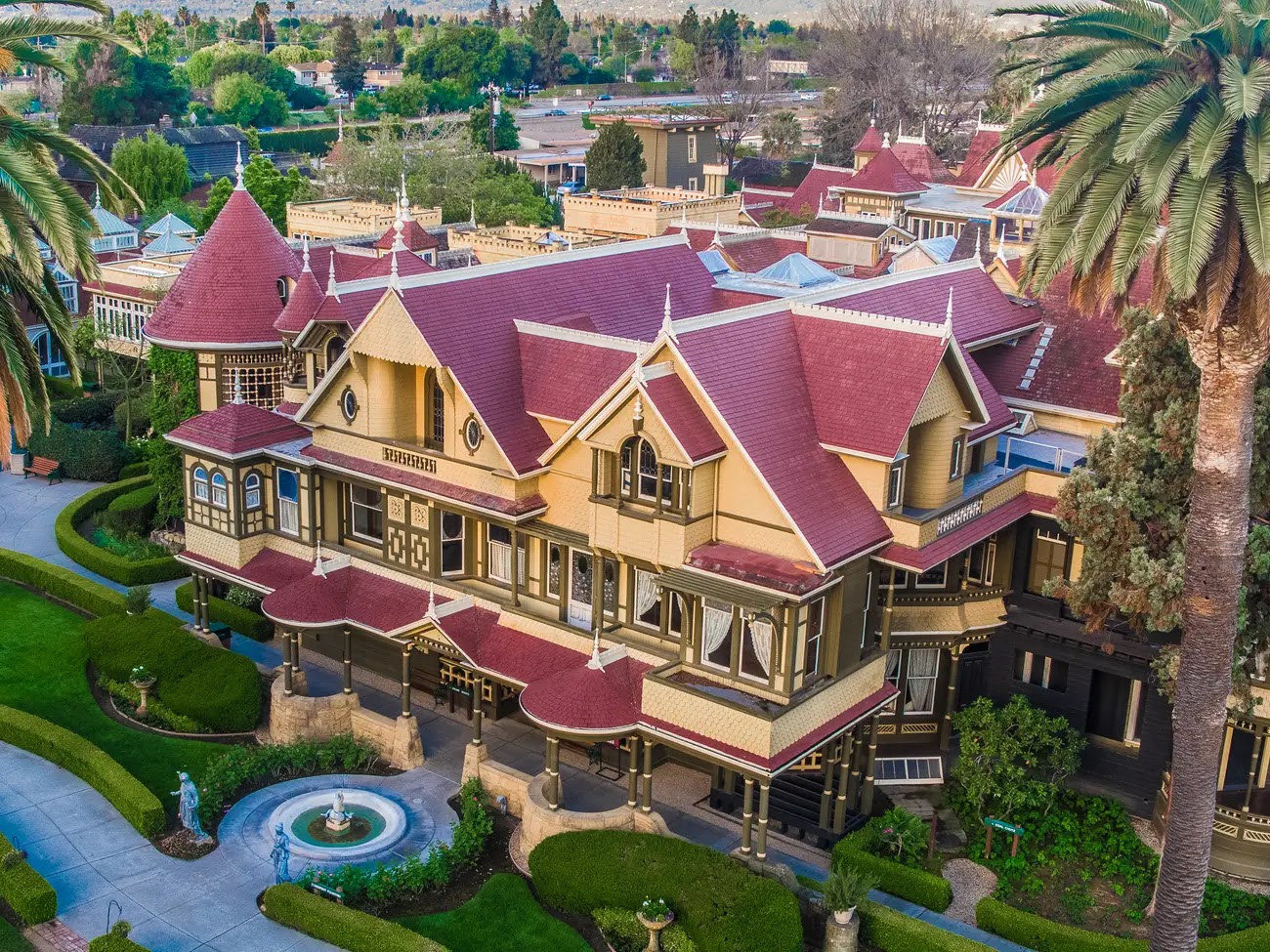
Among the many tidbits I absorbed during my insatiable reading as a curious kid, who labored to understand people and their motivations, was that interior spaces with geometrically irregular floor plans are more likely to be declared "haunted" than square or rectangular ones. A five-walled room, a room with sloping ceilings, a room with a crooked floor – these are where, according to superstition, spirits are wont to play. Take one look at the weird geometries of the famous, supposedly haunted Winchester house, in California, and you can see how someone might be unsettled by architecture.


I don't know if real research has ever gone into the allegedly disorienting effect that bizarrely shaped rooms have on the psyche, but what firsthand effects I've experienced seem very real indeed. While I haven't seen any ghosts, I've felt the subtle yet undeniable pull of madness from occupying oddly shaped rooms for too long. No prison cell that's held me has been perfectly cubical. Plumbing seems to be the main reason for this. Modern cells are designed with an eye toward crude efficiency
– efficiency of construction, not in terms of occupants' convenience. Closets housing pipes, valves, conduits, and cables impose themselves on our living areas in the form of diagonal walls. My cell alone has seven wall segments, which just seems excessive. My window looks more or less to the west – how directly west I can't say. Another housing unit blocks my view of the sunset (and most of the prison yard). Nothing here runs north-south. For that matter, nothing even aligns with other features of the facility. Every building sits at a funky angle to every other one. The interior spaces defy reasonable dimensions. Hallways run at wonky angles. I have to assume that his design strategy is meant to impart a subtle but notable sense of disorientation in the prisoner population. Maybe its psychological warfare, but, more likely, it's a passive defense against escape attempts. I believe it succeeds on both counts. Windows in prison are a mixed bag. In the Hole, every cell window has downward-angled louvers bolted over it, so you can look outside and see a patch of grass, or maybe concrete, below you – but nothing more. I don't claim to understand how this kind of deprivation is legal. In general population units, a window might just as likely look out on a wooded stretch or trees as on a concrete wall, a stretch of highway, a wastewater reclamation facility, or the prison's pickleball court. Not having a decent view is one thing; not having a bathroom is another. At least the cells at Crossroads Correctional Center, while identical in layout, featured bunks that ran at a 90-degree rotation and allowed occupants to hang a sheet and bisect the space for bathing or elimination purposes under lockdown conditions. These ERDCC cells are impossible to do that with. If you're after a bit of privacy, you can either ask your top-bunk cellmate to cover his head (and trust he won't peek) or build for him a blanket fort on the lower bunk. One way, he'll feel inconvenienced; the other way, he'll feel confined. Either is less than ideal.
Prison life is all about abstaining, making do, inventing, and improvising. Anyone who does enough time will experience all four in varying degrees. Despite the terrible architecture and ambiance, the human spirit finds a way to flourish here. Sometimes its as simple as covering a window or sewing a pair of pockets into your pants. Both can result in a conduct violation, but this doesn't stop people from doing them. We all crave order and are often willing to sacrifice a measure of security for it. If it were possible to rotate the buildings or create more efficient, comfortable routes from one part of the prison to another, someone would've done it, violation be damned. I know I would.