Showing posts with label goth. Show all posts

31 January, 2019

Black Celebration: A Personal History of Goth

Can someone join a subculture without knowing it exists? Is it possible for a single person to comprise a sub-subculture — a clique of one? These are questions I contemplated a lot, based on how I spent my teens and young adulthood.

The riotous colors of 1993 hurt my eyes. Worse yet, its hot dance-poppy tracks (think: Haddaway, Tag Team, Ace of Base) burned in the open cut of my deepening depression. I rejected all of it. The alternative was literal: alternative — as in, alternative music, as in, more specifically, grunge, which to most minds meant Nirvana, a band I could barely stand. Mainstream culture left me feeling conspicuously out of place. Aimless and alone, I stumbled down the gloomy, unlit path of goth.

Before all-black clothes and eyeliner became my daily wear, I'd never heard the word goth. It's likely that I encountered the iconic look — the pitch dark hair, the deathly complexion, the silver-buckled, -spiked, and -chained accessories — in a movie, on TV, in a book, or on the streets of a foreign city before adopting goth's dark splendor for myself. But contrary to what you'd expect, I never set out to dress that way. My transition was organic, a product of several factors.

I came by the pale skin honestly, thanks to genetics and insomnia. Being an overweight tween had inclined me to wear black, which seemed to slim away a bit of my huskiness. The mysterious, the Romantic, the (I'll just go ahead and say it) Byronic had always compelled me. Temperamentally speaking, autism spectrum disorder and major depression made me standoffish. Through my father's broad musical tastes and penchant for nightlife I was exposed to pulsing, subversive-feeling stuff that struck nerves I hadn't known I possessed. Shut in my candlelit room, writing tormented poems while darkwave beats, borrowed from my dad's music library, trembled from the stereo, I was like a caterpillar in its cocoon. All the stuff swirling around in there was bound to solidify into some new form of life eventually.

I emerged as a beautiful black butterfly shortly before turning fourteen. As my personal mythology has it, the trigger was seeing a daytime talk show on which a "troubled" teen spoke about why he wore that ghastly makeup and black velvet, lace, and leather. The dramatic monologue he delivered, about coping with darkness by embracing darkness, was my own angst given voice. Before that epiphanic Oprah episode (or whatever it was) I'd believed myself alone in feeling this way. In the egocentrism of youth, what teen doesn't think he's the first, the only — even when that exclusivity is to his detriment? Regardless, from that day forward, every time someone asked why I dressed all in black, I answered in one of two ways: either "Color is nothing more than trumpery and lies," or "Because the price of tomatoes has fluctuated again." I was a blast at parties. (No one invited me to parties.)


Better than any other lesson, school taught me that I did not fit. The adjective peerless implies good — unequaled, unrivaled. But I dropped out of my academically prestigious high school in large part because I had neither equals nor rivals. To be an outcast, that is, to be cast out, you have to first be in. I'd joined no clubs, hitched myself to no teams, took part in no extracurriculars. I'd walked to classes unaccompanied, literally on the fringe. Except in the eyes of one accidental girlfriend who mistook my awkwardness for cool, I was a non-entity.

I was eventually old enough for the clubs that, if only one night a week, played the darkwave and industrial (i.e., goth) music that lured palefaced youth out of seclusion. In preparation, I'd powder my nose, smear my eyes with kohl, take one last appraising look at myself in the mirror. My studded collar and high Doc Martens looked suitably fetishistic. My silver rings glinted. My lacquered fingernails reflected darkly. I'd head for the car, slipping a Djarum Black from its box. I'd light the clove cigarette and inhale. I'd turn the ignition key. I'd crank up the music and drive.

The parking lot would be scattered with vehicles and little groups of black-clad twenty-somethings, all rendered paler than normal in the sulfurous light. Most showed up every week, drawn by the camaraderie of other gothic oddities. The DJ was basically irrelevant; no one ever really danced. Like me, they huddled at the periphery of the dance floor and watched the poseurs do their thing. The poseurs were the worst. The poseurs were whoever they suspected of wearing color during the week, and anyone deemed insufficiently cool. Which was everyone.

Inside, the club's red lights would smooth and unblemish every face. "This Corrosion," a Sisters of Mercy song so stereotypical as to be almost a joke, would crash along while everyone feigned indifference. I'd stand, drinking my nonalcoholic drink, not talking to any of the people milling around, ignoring me. Many hugged each other, displaying affection more freely than you might expect from people wearing spikes and claw rings.

Although I looked the part, my club experiences were from a certain standpoint no different from school. Perhaps recognized by sight, I remained unacknowledged, unknown. I returned, week after week, in the hope of making a friend, yet lacked the wherewithal to break the ice. After a few hours, I'd go home feeling more alone than when I arrived.

Online newsgroups and IRCs (Internet chat groups) opened the world of goth to me, in the form of band recommendations, links to clothing boutiques, recipes for cocktails, lots of biting social criticism, and tips for coloring everything, from clothes to flowers, black. Goth's online contingent was even more fiercely cliquish and territorial than the clubgoers, but as long as I didn't try joining in, I could slink along the virtual periphery, reading their tips, quips, and laments, and silently judge those self-appointed arbiters of gothic taste and macabre fashion.

I couldn't stand those elitists' mentality, the way they gazed down with gother-than-thou scorn from their obsidian tower. I soon disassociated myself from the lot of them, the online contingent and their real-life counterparts. I continued to dress the part, and certainly didn't give up the music I loved so much, but I wouldn't permit anyone to mistake appearance for substance. For instance, my father was on the phone in the next room one afternoon, talking to a friend about me. I heard him say, "He's too goth to go see Mrs. Doubtfire with us." Without getting up from my computer desk, I shouted, "I'm not goth!" And I meant it. However, this irony was not lost on me: in my browser window was a man in black lipstick, modeling a very tall pair of boots beside a crying angel statue. That picture made me really want to buy those boots. Deep down, I was goth as fuck. No impassioned arguments would change that.

A thousand essays and academic papers have been written with the title "What Is Goth?" Debates over what (or who) does and doesn't qualify as goth continue to rage on the Internet. Goth is what was once freely called a lifestyle — heavy on the style. It's precisely this quality of insubstantiality that I believe has made it so difficult to define. It's shallow, and you can't base an ethos, and certainly not a philosophy, on black clothing and minor-key music. So, what happens when the kids who dress in impractical, pseudo-archaic outfits and head for the club, as I once did, realize the vacuousness of this aesthetic ideal they've built their lives around?

I chose to dance to the beat of my own drum machine. I toned down the eyeliner. I put away the spiked leather collar. I embraced my ungothly geekiness full-on, with Frisbee in the park, They Might Be Giants on my stereo, and posters of the periodic table of elements in my kitchen. I grew up and all but forgot about the subculture that had seemed so tantalizingly close to my heart.

It sounds like a riddle: I clothe myself in shadow but will not be overshadowed. My sound is dark as night itself. I am forty and still love The Nightmare Before Christmas. What am I?

13 November, 2018

Something Old, Something New (Sonically Speaking)

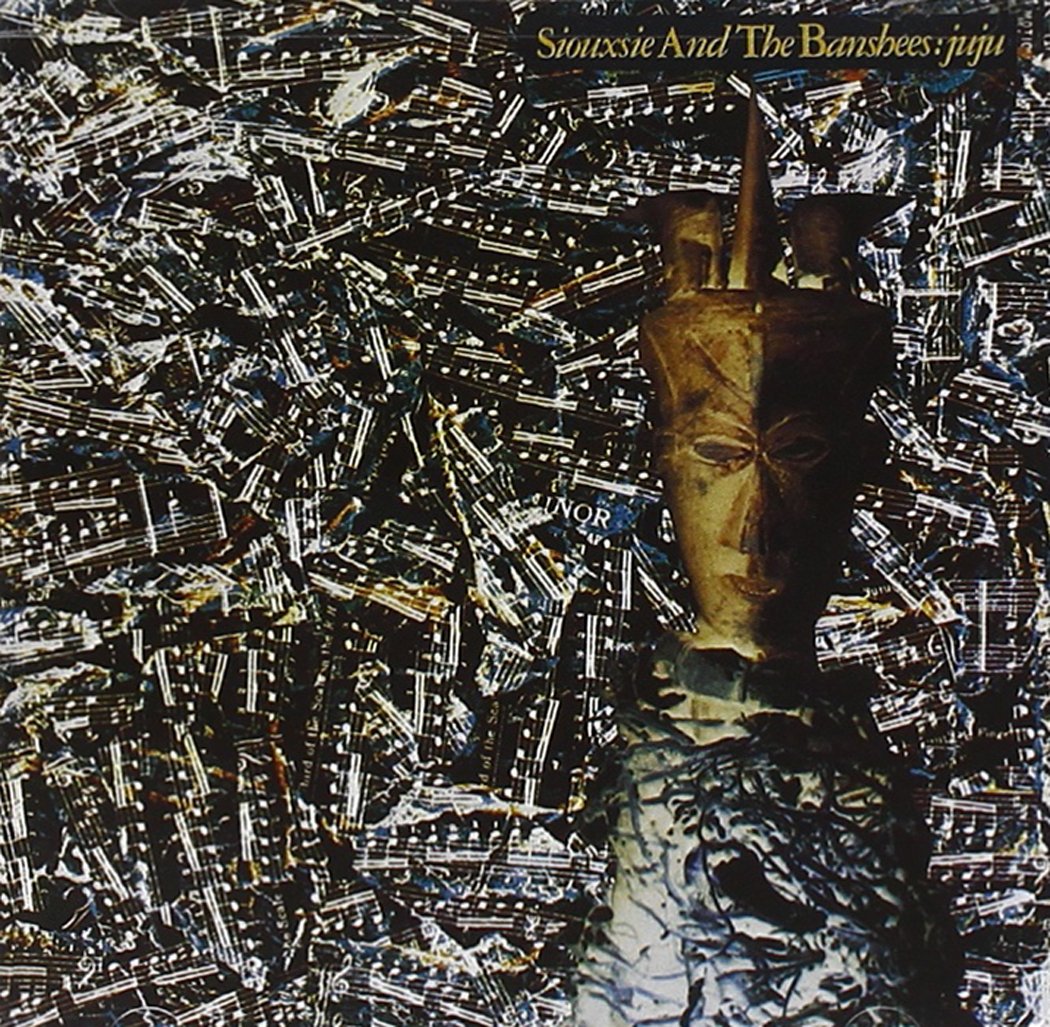
When the iconic British post-punk/deathrock band Siouxsie & the Banshees entered Surry Sound to record their 1981 album Juju, — nine spiky guitar- and drum-propelled tracks that epitomized the sound of my teenage years — I shat myself. Of course I did; in '81 I was still a baby, squirming on the carpet of a three-bedroom house in suburban Middle America, with no awareness of Siouxsie Sioux or her band. I must have soiled fifty diapers in the weeks it took them to lay down all of Juju, never mind the time it took to master the tapes.

Fourteen years after Siouxsie & the Banshees' first show, at
the 100 Club Punk Festival, I fell hard for their melodic take on punk. (Siouxsie's innovative mix of Queen-of-the-Nile makeup and bondage gear helped.) As my musical tastes developed, they stuck close to the period and the place — bands and artists who got their start in late-'70s, early-'80s Britain. My horizons expanded as I got older, but I still love that old-school goth sound. Juju never got old.

We were talking about
the tablet computer I'll have any day now, and my mother asked about downloadable songs: "Do you even want new music? I thought you were stuck on that old stuff."

I guess that
last week's post about meeting my musical kindred confused her. Hearing some old favorites for the first time in decades has been unbelievably cool, sure, but there's a huge difference between still loving Siouxsie & the Banshees and listening to nothing else.
 
Suddenly being able to buy music whenever, rather than only three times per year, and (if the album isn't up to par) on a track-by-track basis, changes everything. I'm no longer held back by the twenty-CD limit the Missouri DOC imposes. Now there's a new dilemma. I tweeted about it, here, last Tuesday: how's a guy to choose, given JPay's selection?

So many contemporary groups and artists I've wanted to sample are available now, including
Youth Code, Savages, Silent Servant, Vatican Shadow, Anasazi, the Chameleons (UK), and the Soft Moon. My musical wish list will have to be kept in check. A preliminary search also showed pages of Siouxsie stuff, including some released since my imprisonment... and a 2006 remaster of Juju.
 

Balance, I tell myself, and take a few cleansing breaths. Balance and restraint. You've still got to use soap and eat. Oh, but you do have a birthday coming up.

19 September, 2017

A Freshly Scribbled Personal Poem with Nowhere Else to Go

"When I Was Young…"

The words slipped out before their import struck.
Further utterance obstructed, I clutched my face and slumped.
A low groan deeper than any half-assed laugh
Rose as camouflage.

There it is, I thought, cradling my skull.
Embodied gray in one point five kilograms,
Almost four decades a little more tattered
By every peek, reconfigured subtly by the act of reference.

Mutti, did you really used to call me Kleiner Mann,
Or was it someone else who aged me prematurely?
To a lover, once, who declared that mine
Was an old soul, it's true I offered a bag of prunes.

The boy with his slippers and robe, and his
Antiquarian collection of fossils and rocks,
Used to shred bread for ducks at the park.
He had in mind a future as an Egyptologist.

In mummification the brain was the first thing to go
Because ancient Egyptians believed it served no purpose.
Other organs were preserved in jars for the soul's journey.
Anubis, jackal-headed assayist, weighed one's vital baggage.

Immortal at sixteen, I dressed and rimmed my eyes in black,
I kept, as a pet, a rat. Rattus rattus was once deified,
Symbolic to the Egyptians as representing wise judgment and,
Further reading in adulthood reveals, also utter destruction.

* * * * *

The seed from which this poem grew was a conversation I had, sitting at the Old-Man Table. The topic that day is irrelevant. What matters is that I began a sentence with the four words that became this poem's title. There was no turning back; once you acknowledge that you're no longer young, it's all downhill. And so this poetic tumble through weedy memory, flowery patches of erstwhile interests, and past-life brambles, ending in the discovery, at the bottom, of a happenstantial connection that won't completely make sense unless you understand how I was wrongfully convicted of murder.

Predicting the future is largely impossible, but scouring the past for signs of a now-inevitable present can be all too tempting. There is nothing to stem our sense that we're onto the true reasons for everything that came to pass. As if we humans need something else to think we've got all figured out!

22 May, 2017

The Astonishing Kindness of Sacred Bones Records

I'm limited. What little I can do is therefore cherished. Sometimes someone else's willingness to take an extra step allows me to have a smidgen more than usual, and these instances are like shooting stars in my fixed sky — reminders to keep looking up.


A recent letter from Sacred Bones Records, the boutique label in Brooklyn, New York, that releases albums by filmmakers David Lynch and John Carpenter, as well as those by less recognizable (to most) artists such as Moon Duo and Pharmakon, was one such bright appearance. "We would be more than happy to get music to you," it said, "and hope that it can take you out of your situation, even if only briefly." 

Wow. Amid all there must be for a record label — even a small one — to fuss with on a daily basis, to agree to some prisoner's request to accept a piddly cashier's check, then pack and ship a couple of CDs… then astonish that prisoner with offers to substantially reduce their prices and send demos to him for free — that is simply beautiful. I hadn't even dropped pariahblog.com into my signature when I reached out, because it didn't seem relevant. They just thought my earnest request was enough. 

The CDs arrived on Wednesday morning. At the special price, I ended up with four for what I anticipated paying for two: albums by Pop. 1280, Zola Jesus, Case Studies, and a compilation of vintage goth and post-punk groups. 

There are so few opportunities for new music to come my way, and hardly any of what I hear is the sort of thing that stirs me. This stuff, though — this is the bee's knees. So thank you, Caleb and everyone else at Sacred Bones, for setting me abuzz with happiness. 

28 September, 2016

When Prison Culture Meets Black Lipstick

Tony and I were walking from the dining hall to the housing unit when he caught up to me. He'd seen the teaser for MTV's 7 September episode of Unlocking the Truth, the one introducing my case, and of course wanted to tell me so.

"They showed a picture of you in drag, all painted up."

I practically snorted, thinking, Good one, Tony. The photo in question shows my pale young face, cheekily glancing away from the camera, wearing eyeliner and a black-lipped smirk. My black velvet shirt and black coat can barely be seen. My fifteen-hole Doc Martens are out of the shot altogether, as are the silver chains draped from my right shoulder. I don't recall wearing jewelry more outrageous than my everyday piercings and two handfuls of silver rings that evening, but that doesn't mean I didn't. Jokingly calling this gothy getup drag was typical Tony, and I accepted the dig amiably.

Only later, replaying our conversation in my head, did I realize that Tony might not have been kidding around. He's been locked up for a long time; might he not know the vast difference between drag and goth? And if he doesn't, what could that mean for others who see the show — people around the prison who don't even know me as tangentially as Tony does?

For the very first time since Unlocking the Truth started delving into my case, I was nervous.

The average convict isn't known for his open-mindedness or reasonableness. Penned in by razor wire and walls, the tattooed swastikas, neighborhood affiliations, and gang code on most prisoners' bodies speak to their intolerance of the Other. Ask almost any citizens on the street and they'll likely supply two accurate facts about prison life: (1) it's governed by a rigorously enforced power dynamic; (2) it's run through with a current of barely contained sexual frustration. What might the sight of me in the summer of my eighteenth year, made up and dressed for a party, inspire in the mind of Billy Badass, DOC number 40926, who's been down since 1981 and ain't never seen no shit like that in his jerkwater hometown, where only whores and queers wear makeup, and the livestock are all a little jumpy? Would his shuttered mind compute? Or would he default to the old mental schema, Lipstick is for girls. The boy in the picture wears lipstick. So he must want to be a girl. I will make him my girl, thereby inciting an unpleasant circumstance for all involved? You can understand my concern.

The episode in question, when it aired, glossed over any meaningful definition of goth, probably because MTV's demographic has grown up in a culture that's more inclusive than those of previous generations. I suspect that every Millennial had at least one goth kid at their high school. My lawyer's description alone, that labeling someone "goth" was how law enforcement, post-Columbine, branded that person as "bad," didn't seem like enough for the population of Crossroads Correctional Center to comprehend the goth subculture.

Walking the yard with my friend and former cellmate, Zach, the following morning, every comment that came my way (there were more than I anticipated) was complimentary.

A neighbor said, "I loved how, in your interview, you threw in a little humor. When you said, 'I was a weirdo — I'm still a weirdo,' that really got me."

Some guy I'd never before spoken with said, "That's exactly what prosecutors do: they dehumanize you to prejudice the juries. You got right to the heart of it, there."

Another guy: "When they came, at the end of the show, and played that phone call, I was like, 'Damn, people, he didn't answer her question because he doesn't respond the same as other individuals would: he's weird.' I just needed to let you know, I believe you, man. Fuck that lying crackwhore."

And so on, from countless strangers and acquaintances alike, for days. No one made so much as a peep about the party photo Tony saw in the teaser. If anyone was struck by my smoky-eyed makeup in almost every other pic, they uttered not a word about it to me. It seems like my concession to weirdness wiped away any questions about my particular, peculiarly dandyish, brand of masculinity.

For decades I've held that the elegance of honesty needs no adornment. My outspoken truthfulness sometimes lands me in trouble, but this time the maxim is right.

19 September, 2016

The Fragile Collection

Where we lived in southern Wyandotte County, Kansas, was quiet without being too quiet. The suburban houses were widely spaced, constructed in a mishmash of styles, over multiple decades, an architectural grab bag. Most of our neighbors were older, and I was one of maybe five kids within a one-mile radius. A lot of the neighbors we knew by name but weren't close enough for block parties or borrowing cups of flour. What the neighborhood did have was an ample selection of nooks and semi-hidden passages that would've been irresistible to any free-range seven-year-old.

Mama and Papa's ease with their little boy's unsupervised traipsings wasn't negligent or crazy. The kid whose room was as organized as an entomologist's specimen drawer, who once laid a trash bag on the foyer floor before going tromping through backyard mud, and whose reaction to the "stranger danger" talk was a faintly irritated "I know" — he needs minimal minding.

I was forever picking up stuff while roving. Of the random rusty machine component half buried until my inquisitive fingers pried it free, I wondered what it did, then visualized some Rube Goldberg contraption it operated inside. If I found an out-of-place rock in a sand heap, I'd theorized about freak geological events that could've brought it there. Every child's curious about the whys and hows of things, and at least in this respect I was no different.

Lots of the objects I gathered got imaginatively repurposed. A seafoam-green glass insulator off a power pole became a bookend. Ball bearings found their way into my bag (which itself once sheathed a Crown Royal bottle) of marbles. A length of flex tubing made an arm for my robot costume. But not every object had practical potential. My "useless" finds usually gained a place of honor in the box.

If the box smelled weird because of what it held, I considered it a good weird. That scent: dry paper, soot, a hint of vinegar. Just sniffing the box could be gratifying. Careful not to tip it and disturb its contents, I liked lifting it from the shelf, bringing it near my nostrils, and taking in a deep breath. Maybe the box smelled the way Egyptian mummies do, the way ancient scrolls do, the way treasure buried on a desert island does. I fancied likening my stuff to priceless antiquities, since what I kept in the box was priceless — at least to me.

FRAGILE: HANDLE WITH CARE, read the lid. Without measuring, I had concentrated very hard on making my letters big enough to span its width precisely. I also put permanent-marker cautions on the sides. Who might go into my room and rummage through its shelves of bric-a-brac, I hadn't the faintest idea, but wasn't safe better than sorry? Further insurance: a lining of cotton balls glued to the underside of the lid, and to the box's interior bottom and sides.

To open the box you pulled forward a fold on the front. Two tabs slid up, then the lid clamshelled open, revealing the trove within: my Fragile Collection.

My mental inventory of the box is still mostly intact, thirty years later:
  1. Ant, large unknown species
  2. Ash, volcanic (Mount Saint Helens)
  3. Butterflies/moths, various species
  4. Coral, fan
  5. Egg, robin
  6. Egg, quail
  7. Flowers, various species
  8. Honeybee, queen
  9. Honeybee, worker
  10. Honeycomb
  11. Nest, mud dauber
  12. Nest, unknown bird species
  13. Nest, wasp
  14. Oil, crude
  15. Poop, moose
  16. Quills, porcupine
  17. Skin, garter snake
  18. Skin, reticulated python (partial)
  19. Skull, mouse
Excessively keen of touch, smell, and hearing, my affinity for the delicate makes sense to me now. Saying that my sense of life's hardness developed prematurely, leading young Byron to marvel at how soft, brittle, gossamer, crepey, precariously formed things flaunted their easy destructability in our red-in-tooth-and-claw world, would be overstating it. But I had an inkling. When I weighed the robin's egg in my palm, feeling its tiny earthward pull, a kind of empathy was at work. We're all just barely here, flying through the void on this sphere, minuscule marvels of chemistry and physics. The blown-empty eggshell was a memorial to a life that might've been — except it, too, was doomed to destruction. The world couldn't let it last.

My Fragile Collection survived as long as I was its curator. Whatever happened to that box? Has the papery wasp nest crumbled to dust? Did the plastic bottle of Mount Saint Helens ash crack open and scatter its ultrafine contents with the wind? And what about me? Consigned to fire, I was somehow tempered, rather than charred. In the process I realized that the naive young collector's kinship with those fragile things was misplaced. He didn't consider the wide gulf, between existence and death, called living.

30 October, 2014

Some Thoughts on Last Week’s On the Case with Paula Zahn

The last couple of weeks have been strange ones. At first I thought it was just Octoberfeast — my annual candy-and-treat binge — coupled with the pre-Halloween lineup of holiday favorites on ABC Family. Last week, though, when I heard that On the Case with Paula Zahn announced their show about Anastasia WitbolsFeugen’s murder, I suddenly had something to point at and go, “Yeah, that’s what’s distracting me.” It’s as if I’d been pre-empting my regular schedule in favor of the absent-mindedness to come.

I had no idea the show was being filmed. You’d think a producer worth his or her salt would make at least a perfunctory effort to include the condemned man’s words, if for no other reason than to proclaim, like a carnival barker, Ladies and gentlemen: evil in the flesh! Thrill and gape, viewers, at the sinister visage of the Soulless Man! The perfect seasonal freak show, seventeen years (nearly to the day) of Anastasia’s grisly death. But they needed no interview, not really. Old photographs of the man as a boy, togged out in all his black-and-silver goth finery, were far more superficially tantalizing.

The outcome was predictable. Or so I’m told. The cable package to which Crossroads subscribes doesn’t include Investigation Discovery, and that might be just as well. A lot of my friends speculated that sitting through all the old talking heads — Anastasia’s emotional wreck of a father, the histrionic prosecutor, the ex-girlfriend whose vengeful lies cost me the rest of my life — more than by the surreal feeling of being talked about on TV, I’d be bothered by the sense of déjà vu harking back to my four-day trial, when the things that I thought most crucial to my defense were silenced by a misguided arbiter. At best, Paula Zahn’s show might’ve made me laugh for all its egregious faults and inaccuracies. (Since an ability to laugh at the badness of a thing is what carries me through the worst.)

Do I want to watch the show? Not especially. Would I, if it came on a different channel? Almost certainly. How might I respond if, hypothetically, I did watch the episode in question? By focusing renewed energy on my fight for justice... but only after another brief candy binge. I’m only human, after all.