The stage is set, and it's green – green floor, green wall, and green gaffer's tape covering the flaps we rigged to cover electrical outlets in what used to be the prison's barber shop. A microphone stand breaks the monochromatic expanse, standing alone in front of the unnaturally verdant backdrop. LED fixtures shine from every angle, and the lenses of three cameras impassively wait to take in today's performance.
Opposite the stage is an eight-foot-wide black desk fronted in smoky gray Plexiglas, where the two judges sit in front of black drapes. Their microphones aren't on, and they're discussing unrelated matters while a crew bustles in attendance to last-minute details. Just off-camera, in a cramped semicircle of six stackable, tan, plastic chairs, sits today's motley assortment of contestants, excitedly chatting amongst themselves. The setting described here is XSTREAM Media's studio, where my coworkers and I in the prison's media center record shows on topics that run a gamut from in-cell cooking (THIS IS FIRE) to conversations about music (The Playlist), to embarking on needle-and-thread projects (Sew What?). I currently manage the whole fiasco, scheduling, setting up for, and directing shows, then doing most of the editing and compositing that comprise the post-production process. I do all this, but I'm hardly the star. The distinction of top billing belongs today to the half dozen people readying themselves to appear on what is arguably XSTREAM Media's most daunting production. The Karaoke Threat is a singing competition. It demands that participants bring their A-game, brace themselves for the unexpected, and leave self-seriousness at the door. Round One starts with six. Each wrote their name a song selection on the signup sheet that hung in the gym for the past month. Our two judges – my fellow Team XSTREAM member Kenny and the winner of the show's last go-round – score every contestant on voice quality, technical accuracy, and "wow" factor. Only half of the people who sing in Round One move ahead to Round Two. In Round Two, the judges choose the three remaining contestants' songs, then someone else gets eliminated. The final round is a zero-sum affair where each singer chooses what song their opponent will perform. Round Three can get a little crazy. Whoever wins gets to not only return as a judge in the next installment but also to call out, or "threaten," someone else to sign up and compete. XSTREAM Media offers a trivia competition (I Knew That!), a weekly panel discussion (4Thought), a cheekily hosted movie of the week (Spotlight Cinema), video-game walkthroughs (The Game Corner), life-coaching (Real Talk), daily five-minute news broadcasts, and more. It's little wonder why Prison Journalism Project called XSTREAM "a media giant." But it's The Karaoke Threat, our felonious riff on shows like The Voice and American Idol, that holds the honor of being our audience favorite. From behind a literal curtain, I cue up everyone's selections. Jackie's opening the show with "One Love," by Trey Songz. Then Greg, an older guy in my wing, is performing the New Edition throwback "Candy Girl." Chelsea, a transgender woman, is doing Cher's "If I Could Turn Back Time" after that. Next is Brian, the clean-cut host of the XSTREAM series Spotlight Cinema, doing the Rollins Band hit "Liar." Arthur, a developmentally disabled man, is giving his best to R. Kelly's "I Believe I Can Fly." And last up is resident goofball Kenyatta, singing "Forget You," by Cee Lo Green. The studio's desktop computer, where I'm posted, has access to hundreds of karaoke videos on XSTREAMnet, sourced from YouTube by our bosses and saved in a growing library. I can't watch the performers from where I sit, but I can see what they see on the display mounted to the judges' desk. I notice every time they screw up the words. The judges don't. Sometimes I think it allows me to appreciate the performances on a different level; sometimes I think it just allows me to deduct more points for inaccuracy. Not that it matters, either way. My scores are the karaoke equivalent of fantasy football. A lieutenant approached me one morning at breakfast, last month sometime, to say that even the guards who work the midnight shift are Karaoke Threat fans. She said that after the prison quiets down, they sometimes get together in the custody complex and watch a little TV. If The Karaoke Threat is on, they usually root for the prisoner who shines boots for the staff, who appears regularly on the show and never fails to get fully into the spirit of things. Music truly can bring people together, and the lineup today represents a unity and diversity that XSTREAM tries to foster with everything we do. When Jackie, Kenyatta, and Arthur qualify for Round Two, the tiny studio erupts with almost deafening applause. In a few weeks, this episode will broadcast throughout the facility, and everyone will momentarily see Arthur as a hero – a status his life has rarely permitted him to have. As for Chelsea, even though she doesn't get a score high enough to advance, it's not because she's trans but simply because her singing is howlingly bad. She still has fun and sticks around to cheer on her former competition.07 November, 2023
The Karaoke Threat
28 November, 2020
The Answer to the Ultimate Question of Life, the Universe, and Everything Is...
Turning forty-two in prison could've been an invitation for depression. Just as likely, it could've simply passed without fanfare, an otherwise unremarkable Monday in a place renowned for fostering undifferentiated days. Something like a conspiracy unfolded, though. The people I love took steps to make my forty-second special. They made not only the day great but the week as well.
Goodness began trickling in last week, with the first of the birthday cards and a bizarre video on my tablet. Those colorful greetings came from all over, from neighboring states and countries on the opposite side of the Atlantic Ocean alike, all of them wishing me good cheer, good health, and, of course, impending freedom. Each card I opened brought a smile, so very appreciated. In the middle of one night, I awoke to several envelopes slid across the floor by the door. I had gone to sleep assuming that a guard delivered Friday's mail without me noticing. That hadn't been the case. (Like most things here, mail delivery times are wildly inconsistent.) Curious, but not wanting to wake Jeff with the crinkling of paper at 2:30 in the morning, I had to be content with stacking the mail on my footlocker and waiting until closer to sunup before opening my little trove.
Then, on Friday my Amazon wish list shortened with a single visit to the prison's property room. I left work early and crossed the yard, expecting to pick up a book; the officer brought out a small stack instead. I suddenly found myself at my allowed limit. As I've said many times before, this is a nice problem to have.
"Don't make any plans for dinner Saturday," said Luke, apparently eager to add "personal chef" to the descriptors I already have for him – neighbor, work supervisor, Buddhist services facilitator, friend. "I'm making lasagna and garlic bread. Happy early birthday."
He spent hours prepping. Near the end, I watched him carry a stack of bowls full of sausage to the microwave, what must've been six pounds of meat. My friend went all out. He presented me with a casserole-dish-sized Tupperware container full of the end product, plus two garlic-dusted bagels, for Jeff and me to share. Normally I get a food visit from my mother and friends. COVID-19 prevented that this year. But my early-birthday lasagna made for a good-enough substitute. Afterward, stuffed almost to the max, Jeff and I concluded the feast with some Little Debbie Star Crunches.
The mood that I met Monday with was one of quiet pleasure. Contentment. This is forty-two, I thought at my reflection above the sink. Not too shabby.
"I didn't get you anything," Jeff said by way of good morning, "But happy birthday." This sentiment from my cellmate, who usually just frowns on birthday celebrations, was cool. Maybe we can consider it progress.
At work I just loafed. My three coworkers offered me a free day, to let me just sit at my desk and watch whatever I wanted at the computer. I'm now nearly through all of David Lynch's Twin Peaks: The Return. Since I accepted that I'd never get answers after the original run ended, being so close to them now, twenty-five years after I first saw the series, is a uniquely fulfilling gift indeed.
Later, once I came back to the house, I made phone calls, read a bit, and began making thank-yous for the many people who made the day extra special – because what better way to celebrate the anniversary of my birth than by appreciating everyone who contributes to this precious life?
09 October, 2020
Tom Waits Time Machine
"Tango Till They're Sore" is the fifth track on the timeless Tom Waits album Rain Dogs, released by Island Records in 1989. It clocks in at less than three minutes but that brief amount of time can do a lot. Its effect on me is a kind of time travel, twenty-three years into the past.
23 May, 2019
Do All Bald White Guys Look Like All Other Bald White Guys?
31 January, 2019
Black Celebration: A Personal History of Goth
Before all-black clothes and eyeliner became my daily wear, I'd never heard the word goth. It's likely that I encountered the iconic look — the pitch dark hair, the deathly complexion, the silver-buckled, -spiked, and -chained accessories — in a movie, on TV, in a book, or on the streets of a foreign city before adopting goth's dark splendor for myself. But contrary to what you'd expect, I never set out to dress that way. My transition was organic, a product of several factors.
04 December, 2018
Kiosk Chaos
The men with no imaginations and even less money seem to spend the most time on the kiosk, wishing for music they can't afford, and sampling those songs in fifteen-second intervals. The only way to hear anything on the kiosk is to lift its retro-style telephone handset to your ear and hope the wing's background noise isn't at screamy levels. Thus the bored music-samplers are not only getting a very abbreviated experience of their chosen material, the tracks' audio is also piss-poor. They're missing out quantitatively and qualitatively. This deters none of them.
Each prisoner gets a maximum of five kiosk logins per day, at ten minutes per session. It's still too much. The line forms early, usually right after the 6 AM count clears. At any given time, no fewer than two people stand waiting. This endures until evening lockdown, when guards practically have to pry someone's fingers off the metal trackball before he'll retire for the night. Whoever had been next in line has to then come to terms with squandering another stretch of time, and hope he can make it to the line earlier tomorrow.
In general, we residents of the honor dorm comport ourselves with more restraint and respect than prisoners in general population. Problems nevertheless arise. Keeping track of who's next in line gets tricky when someone promises the next spot in line to his buddy instead of the man who's been standing patiently nearby, waiting his turn. Being no doormat myself, I've had one tense exchange resulting from this. At least two confrontations over the JPay kiosks have escalated into fights in honor dorm units. In one, a man almost had an eye thumbed out of his skull. His opponent must've really, really wanted whatever song that was.
I've blogged here before about the surprising amount of music suddenly available to me. Having some expendable funds means contemplating what amazing music I might spend them on. I'd also prefer to avoid grievous bodily harm. The most certain way that I know is to keep off the kiosk as much as possible. It's not an easy temptation to avoid.
20 November, 2018
Life in Prison with a Tablet PC
"Go to your cells, gentlemen, and stand by your doors," an earnest woman in civilian clothes told us. "We'll call you by cell number. You'll come down here and sign for your tablet, then go back to your cell until the rest of the tablets have been passed out."
The occupants of 6D complied with a swiftness that I found amazing. Normally, getting prisoners corralled is a process requiring minutes on end, but this was different — our yearlong wait was at its end.
The caseworkers set up camp at a central table, spreading out packing slips and the kind of redundant paperwork that keeps bureaucrats in business. Noise in the wing died to stage whispers, with the occasional snort of muffled laughter, as the apparatchiks made ready.
Minutes passed. Then the woman squawked, "One-oh-one."
Flouting the directive, I left my door wide open but poured a glass of iced tea and sat back down with the book I'd been reading. Nietzsche made interesting company as the trio worked their way to 208. Only after Cell 206 went downstairs did I set my glass on the desk and stand as assigned.
The trade was more than fair: my signature, DOC number, and the date on a little square of paper, for a seven-inch Android device, charger, and pair of ear buds — all in a resealable plastic bag. The accompanying "Quick Start" information card was several steps down from the thoughts of the German philosopher, and didn't say a thing about charging the lithium-ion battery before syncing the tablet. I did so anyway, while the rest of the wing — more than fifty men, some of whom had taken the day off work specifically for this — impatiently queued for the JPay kiosk. Owners' haste caused a few tablets to die mid-sync. It took less than twenty minutes for mine to reach 100% charge. So when my turn at the kiosk arrived, everything went off without a hitch.
What's it like, having my first handheld touch-screen device? It's definitely a novelty. I once blogged about being "A Very Technical Boy," so I do have thoughts beyond the "This thing's so cool!" variety. Most of them come down to technical matters: the JP5s tablet I got for free last week is faster, more powerful , and sixty-four times more capacious than the first PC I built. (If that's not something to make a guy feel out-of-date....)
A friend sent me birthday money with the condition that I use it to buy music for what he calls my "wannabe iPad." It'd been many moons since I last acquired new tunes, so I responded eagerly: "Can do!" And I did. As I thumb-type this, Savages' outstanding album Adore Life is propelling me like a cattle prod to the brain. Thanks again, John, so very much!
JPay's music selection — basically iTunes for prisoners — is big, even impressive. It makes the acquisitive music lover in me want all the things. I'm not alone in this. For years, Missouri prisoners have been limited to buying CDs from catalog vendors, which is about as limiting as you'd expect. It's especially bad if your tastes, like mine, range far afield of radio hits. The floodgates now have opened. Overheard conversations reveal that some other honor-dorm residents have already blown their entire month's budget, solely on music downloads. Do we blame poor impulse control, or freshly liberated zeal?
For sure, the mood around here has been jovial. Spontaneous dancing is not uncommon. It wierded me out, the first couple of times I witnessed it. Now I know better: the telltale white dots of ear buds confirm that a person's not experiencing a schizoid auditory-delusion, just bumping sick beats. A downcast gaze, likewise, no longer means that a person's in the dumps, only that he's engrossed in whatever's on his little LED screen.
I don't know how the scene might look in another month or so, after the tablets' newness wears off. There's already been a dropoff of kiosk use in the first forty-eight hours, as guys' digital wallets are emptied by media purchases. More settling could still occur. Of course, it could be that JPay is deliberately withholding services, waiting until the initial rush dies away before reinvigorating sales with movie downloads and game apps, both of which have been promised. Just alert me when there's a word processor with a print-on-demand feature — or at least when the e-reader app is available. Meanwhile, I'll be in my cell, luxuriating in fine sounds as I continue trying to write my way out of prison.
13 November, 2018
Something Old, Something New (Sonically Speaking)
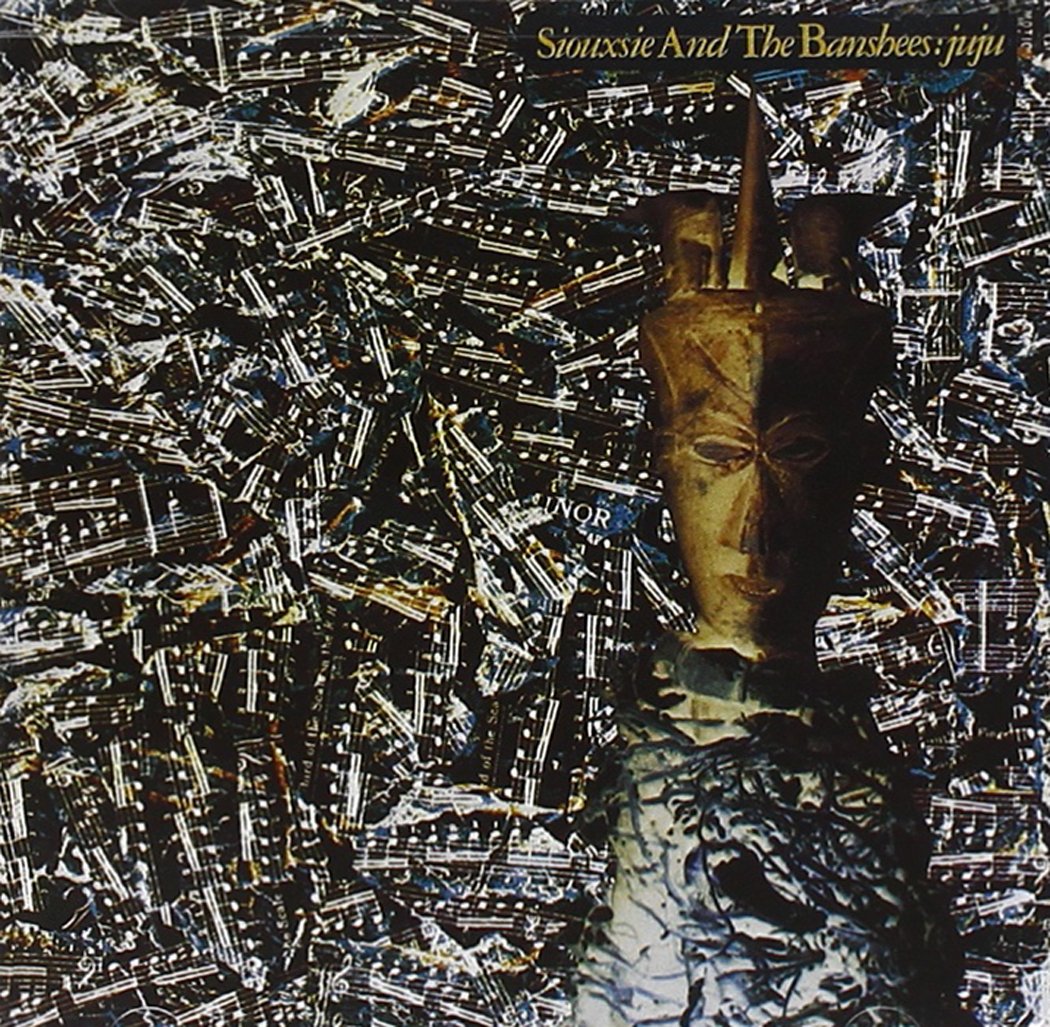
Fourteen years after Siouxsie & the Banshees' first show, at the 100 Club Punk Festival, I fell hard for their melodic take on punk. (Siouxsie's innovative mix of Queen-of-the-Nile makeup and bondage gear helped.) As my musical tastes developed, they stuck close to the period and the place — bands and artists who got their start in late-'70s, early-'80s Britain. My horizons expanded as I got older, but I still love that old-school goth sound. Juju never got old.
We were talking about the tablet computer I'll have any day now, and my mother asked about downloadable songs: "Do you even want new music? I thought you were stuck on that old stuff."
I guess that last week's post about meeting my musical kindred confused her. Hearing some old favorites for the first time in decades has been unbelievably cool, sure, but there's a huge difference between still loving Siouxsie & the Banshees and listening to nothing else.
So many contemporary groups and artists I've wanted to sample are available now, including Youth Code, Savages, Silent Servant, Vatican Shadow, Anasazi, the Chameleons (UK), and the Soft Moon. My musical wish list will have to be kept in check. A preliminary search also showed pages of Siouxsie stuff, including some released since my imprisonment... and a 2006 remaster of Juju.
05 November, 2018
P2P (Prisoner to Prisoner) Music Sharing
This is only my third time speaking with Luke, and already we're first-naming it — a rare thing in prison, where surnames without the honorific "Mr." are the norm. Luke's a friend of a friend of my cellmate's. He's also in Gavel Club. But what brought us together in conversation was overhearing him run down a few of the music acts he searched for, the day that JPay opened its MP3 library to Missouri prisoners last week: the Legendary Pink Dots (and Tear Garden), the Sisters of Mercy, Front 242, and other decidedly Byronic favorites. Weirdly enough, it ended up being him who cornered me at the next Gavel Club meeting.
That was then. Today we're in the Learning Center, where he works and where I watch occasional Great Courses lecture videos. I've bought a handful of CDs — Chelsea Wolfe, Xiu Xiu, the Cure — for him to rip to the institution's virtual jukebox. (Fun fact: per US copyright law, prisons and oil rigs aren't public spaces. Copying my discs to our TV guide's "Gothic, Industrial, Electronic, New Wave" playlist is totally legal.) He's impressed by my offering, and the expression on his face clarifies things for me: Christian Bale and Ed Norton's love child — that's who he looks like.
"Pornography? Man, what a great album."
"A wrist-slashing masterpiece," I say, quoting some forgotten music critic.
"I have Replicas and Telekon back in the cell."
He squints, skeptically. Definitely Ed Norton. "What's your favorite Ministry album?"
"With Sympathy. Their synth pop stuff is more my speed. 'Every Day Is Halloween'? Come on!"
Suddenly it's like we're in a scene from High Fidelity. Luke wants my top five electronic acts. After a couple seconds' delay, I tell him "Okay, of course Gary Numan, godfather of the genre. Then I'd have to say Depeche Mode, New Order, Kraftwerk —"
"I was thinking of, like, bands on Metropolis, Nettwerk, Projekt. But old school — that's nice."
"— and Björk."
"She's not really an electronic artist. Was it Medulla that she recorded with those a cappella singers?"
Before I open my mouth to defend my position, and before Luke brings out a stack of his own CDs for me to plunder in exchange, I know that he and I are going to get along great.
16 February, 2018
The Whistling Plague
Can a person ever be said to whistle aggressively? To rephrase: can someone whistle in such a way that the sound constitutes a deliberate imposition, a taunt, a challenge — a sonic fuck you to all within earshot? This loud little prick seems to spend all day blaring a tuneless mess out of his face. And now he's not alone.
Bad behavior is contagious. Suddenly, every guy running around with a chip on his shoulder has a song in his heart that he wants to share, however inartfully.
Noise is, across personality types and constitutions, a universal irritant. The louder it is, the more stress it induces. Ask the abused detainees of Abu Ghraib prison about AC/DC, or Navy SEALS about Hell Week's cacophony, or Manuel Noriega about the heavy-metal onslaught of his compound by U.S. forces' loudspeakers in 1989 — prolonged exposure to high-volume sound will drive you out of your mind.
Because of my neurological "complications," whistling of any volume or musical competency is generally on par with the smell of baby powder or, perhaps more relatably, biting a nice, big piece of aluminum foil. I dislike most of the people in my wing anyway. They act as if the world owes them something; they disregard the most common courtesies. The eruption of largely atonal whistling by people whose presence was already powerfully unpleasant is just shit-icing on the turd cake.
Why whistle in public at all? Like humming or singing to onself, it's a form of expression that's okay when you're alone — and basically not at any other time. Consider that no sane, reasonable human would, say, walk through their workplace honking at random. How is whistling different? In whose mind is whistling as piercingly as possible acceptable? And yet I am surrounded on all sides by those oblivious to their own behavior, and those too arrogant to care who's put off by it. Either failing goes a long way toward an explanation of why they're in prison in the first place.
Patient Zero, the small-statured man who brought the Whistling Plague upon us, moved in two months after someone assaulted him. He threatened and insulted a man using "his" shower, and that man leapt out, stark naked and dripping, to beat him down. Maybe someone else will get fed up with his dissonance, but even if I were that lucky there'd still be the remaining infected. My only hope against the Whistling Plague is my over-the-ear headphones.
22 May, 2017
The Astonishing Kindness of Sacred Bones Records
20 June, 2014
When Will Missouri Let Its Prisoners Join the Electronic Conversation?
Of course victims’ rights groups are terrified of what the National Organization for Victim Assistance’s mouthpiece described last year as “unrestricted and unsupervised outreach where inmates can revictimize or continue to intimidate victims.” However, because e-mail is even easier to monitor than the already-permitted (and well-policed) telephone conversations prisoners are having (think: filters and automated keyword monitoring, plus ease of storage and of live-human retrieval), NOVA’s argument is a little silly. The frequently extreme perspective of victims’ rights groups should be taken into consideration when weighing what privileges prisoners ought to be granted. Many would have convicts of every stripe sentenced to hard labor and bread-and-water diets.
To be fair, there are prisoners who might try to use electronic means to commit their nefarious deeds, but no more than are currently doing so with cell phones smuggled in by guards and other prison staff. (It’s interesting to point out here that illicit cell phone use in Texas prisons plummeted when the Lone Star State installed telephones in its facilities’ housing units, a statistic one Texas prison official attributed, on record with techno-culture magazine Wired, to most prisoners simply wanting to call home.) For public and institutional safety, the channels for contraband need to be closed. Until staff members are caught red-handed, breaking rules, it’s an unfortunate fact that prison administrators tend to treat their staff as being beyond reproach. This would have to change before truly effective security measures could be enacted. Maybe victims’ rights groups should recalibrate their sights to aim at greater institutional scrutiny of prison employees.
Prisoners with a supportive social structure beyond the facility walls have been shown, in study after study, more likely to rehabilitate and less likely to reoffend, and there can be little doubt that being able to send and receive e-mail will improve prisoners’ feelings of connectedness to loved ones and society as a whole. I’ve personally bemoaned the inconvenience of snail mail for years. Not only would my contacts appreciate not having to fold, seal, and stamp everything they send my way, the editors, scholars, and businesses I sometimes reach out to would be more apt to reply (you might be amazed by the number of people for whom an enclosed SASE is not sufficient motivation).
Yes, mine is a biased opinion. I’m ready to get back to Information Age communication methods. This ubergeek struggled mightily, while awaiting trial in the county detention center, with symptoms of Internet withdrawal — disconnectedness from always-on friendships, mainly — and the thirteen-year interim hasn’t done anything to mitigate my frustration. Being able to tap out e-mails from my bunk and view pics in my inbox of my mother’s trips abroad, my godson’s childhood milestones, my friends’ #humblebrag Instagram posts (I’m far less interested in games, or even MP3s) would do so much to reduce the isolation that is my normal. Loath as I am to entertain thoughts of things to make my prison stay more comfortable, it seems as though, as long as I have to be sequestered by injustice, buying a gadget to ease the pangs of separation seems like a worthy consideration.
It took until 2004 before the Missouri Department of Corrections gave its prisoners the go-ahead to buy CD players. It started selling us flat-screen TVs a few years later. Devices are one matter, social betterment is quite another. So is money. States that offer prisoners the mini-tablet computers I mentioned earlier don’t only profit from markups on the hardware. When Keefe Group introduced its MP3 player and penitentiary approved music-download service in 2009, it netted more than a million song downloads, each of which deposited a percentage into the state’s coffers, too — and that’s solely music, a luxury. E-mail satisfies a deeper craving — that for human contact — and is self-perpetuating, since nearly every click of Send leads to another click of Read, which, in turn, leads to a click of Reply. There’s money to be made here, broke Missouri, and I’m willing to let you have mine.
31 December, 2013
Touch and Go Records Make My Month
There are no trains that leave from the maze
Your only chance was a ship to escape
You’ll be the lighthouse in the storm
I’ll be the ship with a thousand dead souls
But how long will they believe in a light so dim?
Down in the gallows the darkness glows
But it’s hard to see in the hearts of them
If you see a light, call down below
I’ll be moving and sorting out our fears
But how long will we believe in a light so dim?
Time is all we have, so take the time
Time is all we have, so take the time to make the time
Throw down the line, I’ll see to climb
If it’s held close it may just work
If you are the lighthouse in the storm
I’ll be the ship filled with a thousand dead souls
Time is all we have, so take the time
Time is all we have, so take the time to make the time
A friend hosted a weekly punk show on KKFI, an independent Kansas City public radio station, and sometimes she’d break up sets of Crass, the Misfits, and Nashville Pussy to dedicate a song to me, off one of the CDs from my at-home collection. Thanks to Madeline’s (now long gone) show and Sonic Spectrum, with Robert Moore, a much-respected local dejay, I got my occasional fix of Black Heart Procession music and was able to keep up with sporadic bits of their later work. Some I captured on cassette tapes, which I then played over and over and over again, heedless as always to the dangers of nostalgia, but genuinely happy.
The prison eventually allowed its inmate population to buy CD players and to mail order discs from approved vendors, which was nice, but by then I’d compiled a little bestiary of mix tapes I was loath to part with. A few things I’d recorded were irreplaceable — live in-studio or onstage sets — giving me at least one solid reason not to make the switch to digital. Quantity was another. The rules cap inmates’ collections at twenty cassettes or CDs, so switching meant ditching my ninety-minute recordings for a format that averaged just over half that playing time. However, new releases weren’t available on tape. As wave after wave of unfamiliar sounds washed over my bulwarks like the songs of sirens, my resolve crumbled. It was only a matter of time before I surrendered and dived in.
Compact discs were already on their way out by then, surpassed in popularity by compressed-bitrate convenience, and the few vendors that still did business with the incarcerated, via certified checks and postal delivery — Union Supply Direct, Music by Mail, Walkenhorst’s, Pack Central — carried only a smattering of CDs by the Billboard-uncharted bands and artists I most enjoy. My Deserted Island Collection is comprised of some great stuff today, all of it from the aforementioned companies, but there’s not much else they stock that I’m itching for. To get that, I had to change how I scratched.
“Dear Touch and Go Records,” I wrote a couple of months ago, explaining as concisely as I could, to whomever happened to check the company’s mailbox, how profoundly I love the Black Heart Procession’s music, how 2 was the band’s only album I’d been able to track down and order, and how my unfortunate circumstances made buying from an amply stocked online vendor, such as Amazon, impossible. “Can you help me?” I practically begged.
With an enclosed self-addressed, stamped envelope I suspected might never get used, I dropped my letter in the box. A reply came soon. It was handwritten on tan stationary with the Touch and Go logo in red at the top of the page. At the bottom, in the same red, was printed, “the nice label”:
Hi Byron,
Thanks for writing, and thanks for your interest in the Black Heart Procession! We haven’t had a mail order division in around five years, so we looked around for a store/vendor who could fulfill your request. Somewhat surprisingly, we couldn’t find one... The Internet has made ordering music by mail go the way of the dinosaur. So... we decided to make a one-time exception in this case and ship an order to you directly.
Here’s the thing: I realize that Touch and Go Records is a business, meaning their clear and obvious goal is to make money, and that, in the interest of money-making, collecting about forty dollars on the sale of some older merchandise that wasn’t moving makes good sense. But there were so many reasons for them to have ignored my letter — that its return address was a prison; that indulging my unorthodox request would be a hassle; that the payoff, even for a struggling indie label, would amount to chump change.... “The nice label,” indeed. It’s a gesture that makes me smile, just thinking about it.
My package of BHP CDs should be arriving any day now. A friend with his own copy of Three, when I mentioned this serendipitous tidbit to him, suggested we throw a listening party (“musically group our consciousness with a great album,” he elaborated) once my order gets here. At a prearranged date and time, we’ll cue it up simultaneously and revel in the melodies. Music like a talisman joining faraway friends. If it’s held close, it may just work.
18 August, 2013
My Prison Possessions